70.3 World Champs Nizza
World Champs 70.3 Nice
When I saw the start list for the World Champs in Nice I was a bit shocked. All the top names from Ironman, T100 and some ITU guys were on it. That race was always going to be very hard for an Ironman athlete like me, who was deep in training for Kona. I only qualified four weeks ago and my whole year has been built around Hawaii 😉
I had recovered well from my breakthrough race in Kalmar, but four weeks is definitely not enough to be 100% ready for something this big. Still, I was confident. My fitness had clearly moved forward with the third place in Kalmar. I also wanted to push my carbs from 160g to 180g per hour. That is something I can only test in a race, because in training I can never stress my body hard enough to actually use 180g.
Race morning I was nervous, but in a good way. Before Kalmar I was never confident. My fitness had always been there but I could never deliver in a race what I had in my body. Kalmar was finally different and now I have a plan to repeat what works. So yes, I was ready to kill myself on that hill.
Swim
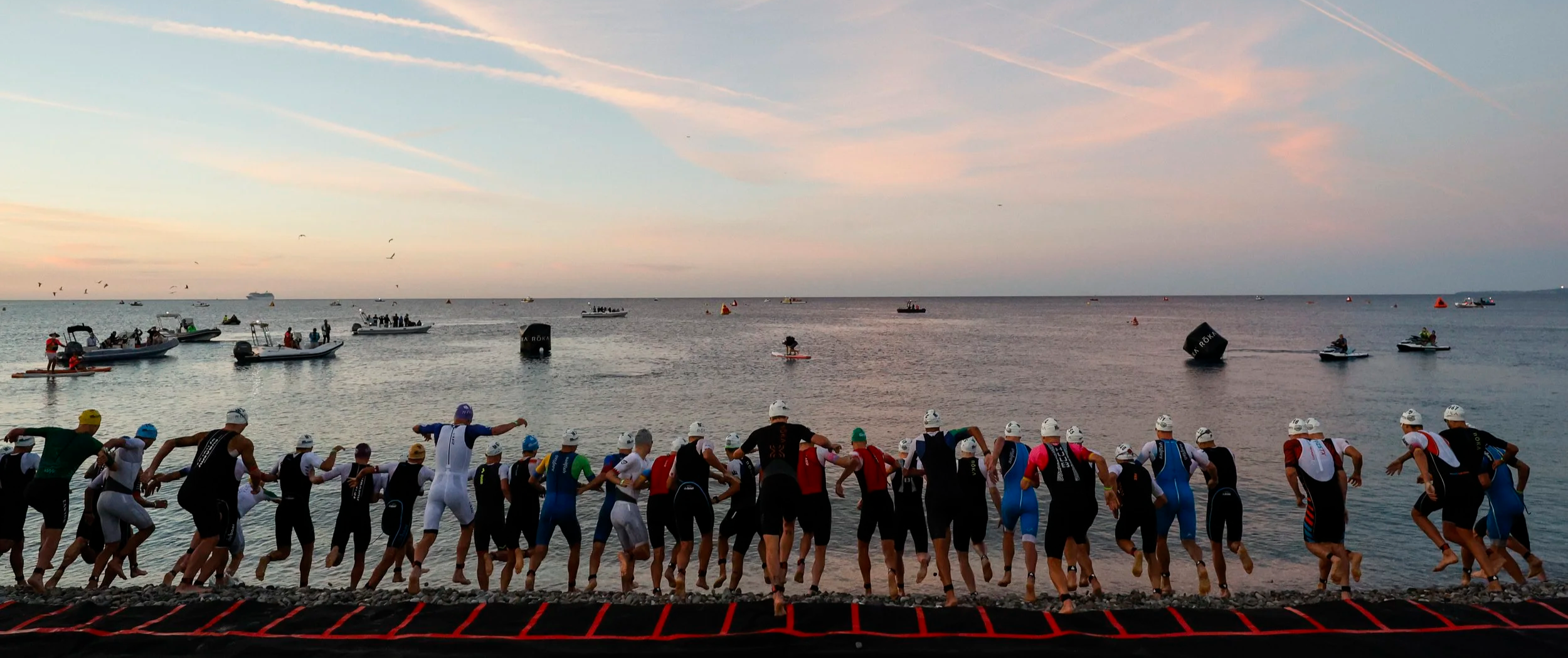
The swim went exactly as expected. Nobody wanted to go hard, because leading a swim costs you power you will need from the first pedal stroke. So the WhatsApp group stayed quiet and we all hoped a young guy would push it. Nobody did. We came out in a huge pack at 1:15 pace, which is very slow for a 70.3 and almost embarrassing for a World Champs. More fighting than controlled swimming. I guess we have to wake up the WhatsApp group in Kona.
Bike
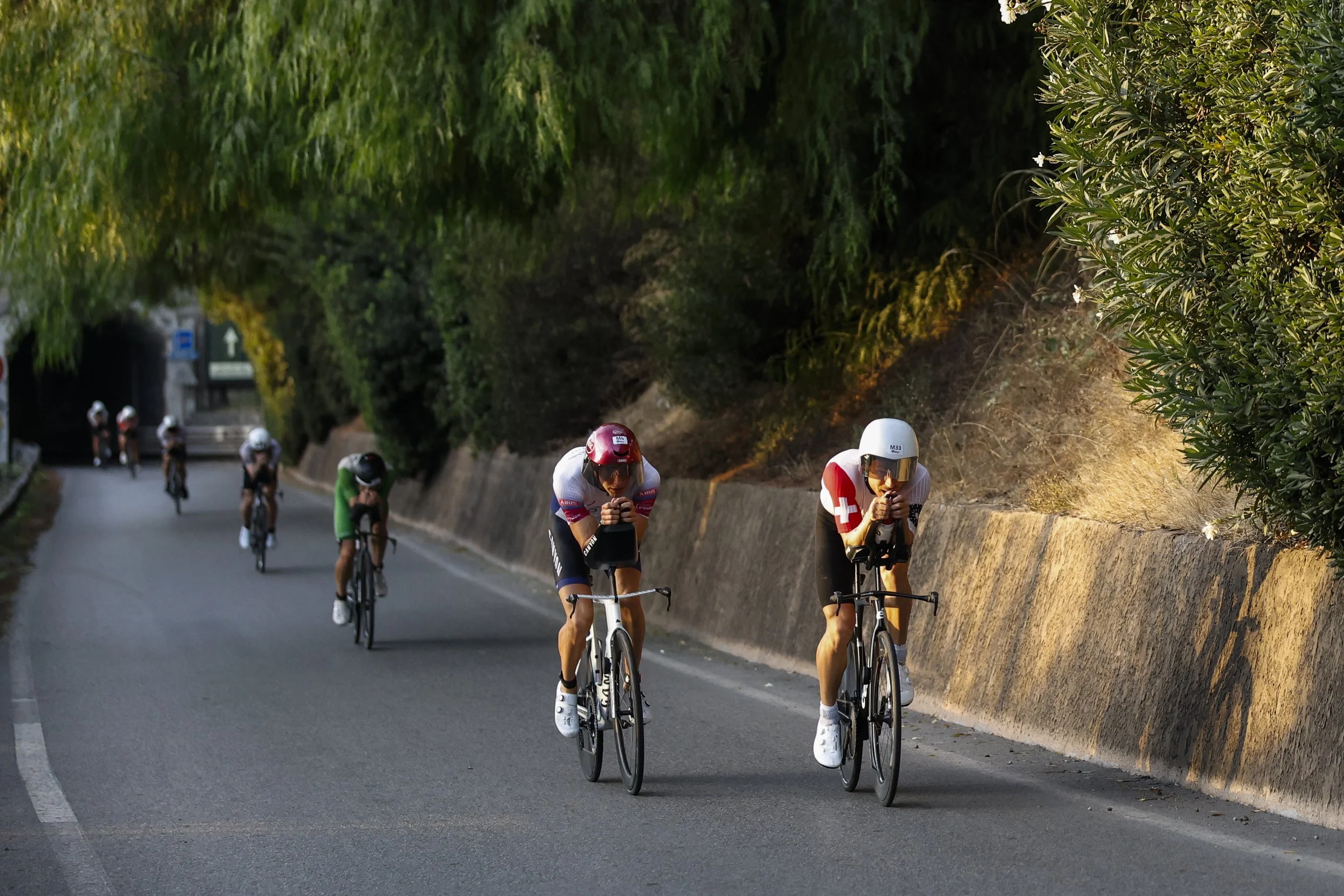
As expected, the bike was fast from the gun. I had a super transition, got my socks on and still came out in the middle of the first pack. With so many athletes within 20 seconds of each other, riding legally at 20m was simply impossible. You cannot overtake a whole pack and you also cannot drop 20m back, because then you are gone.
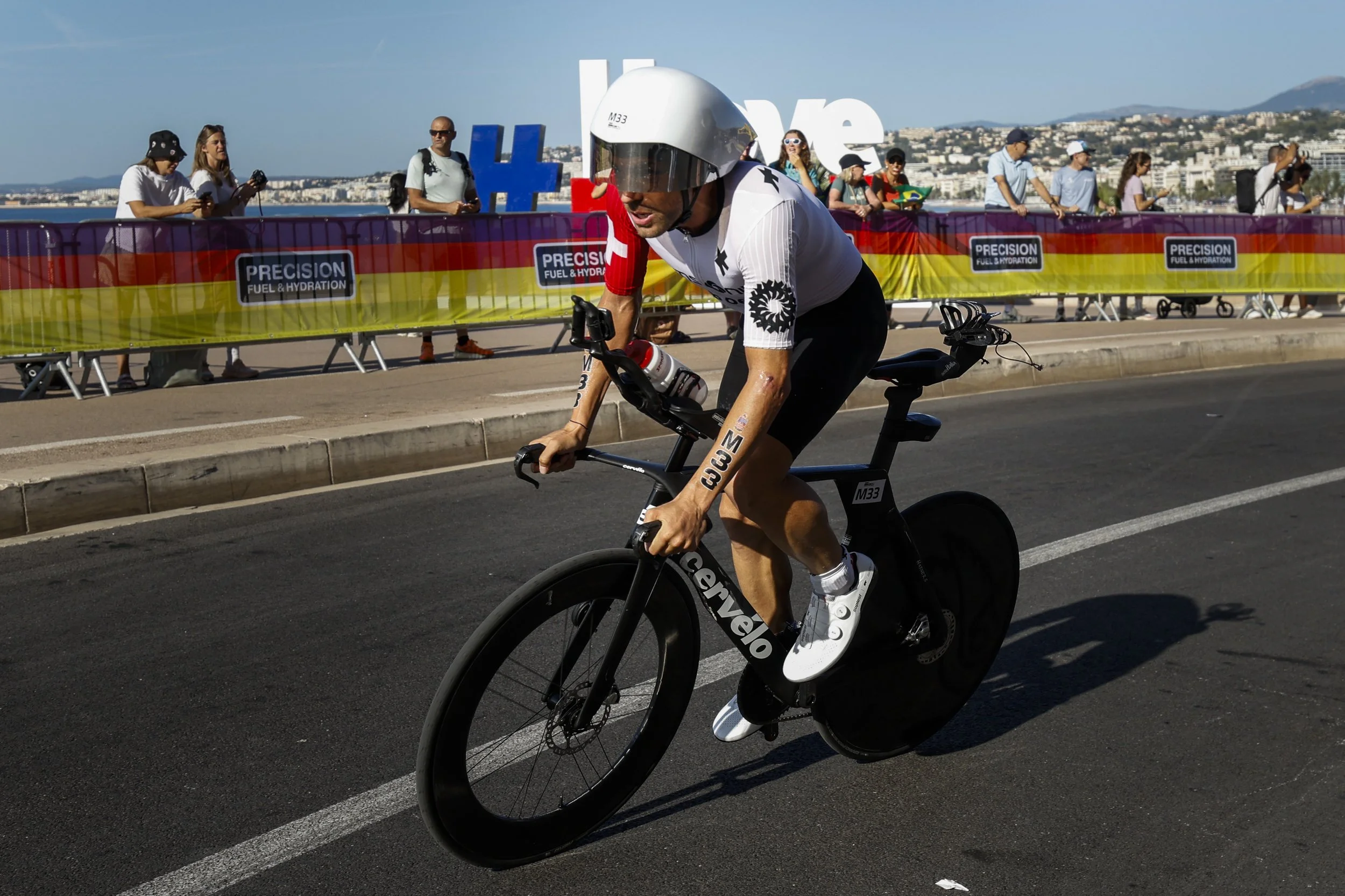
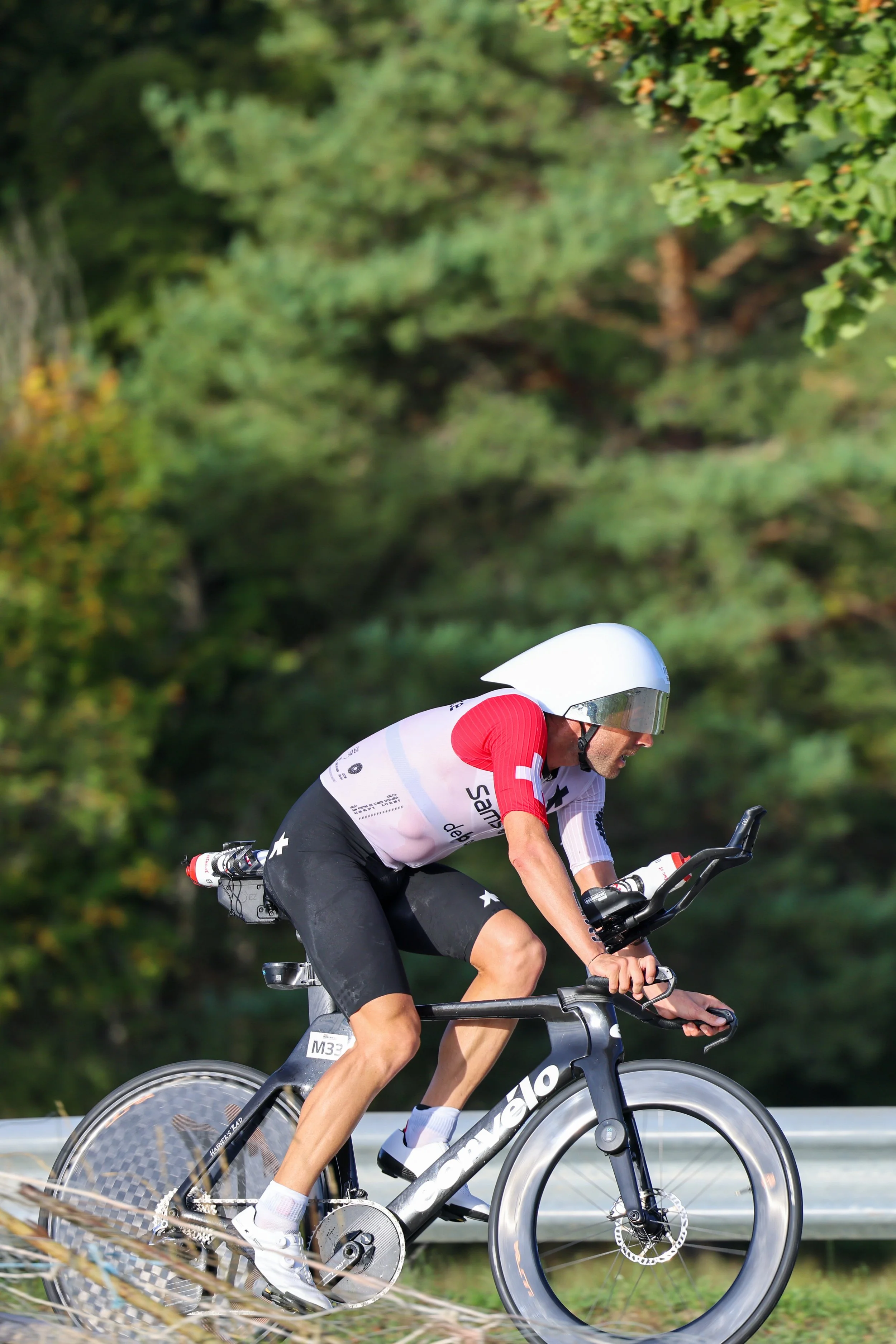
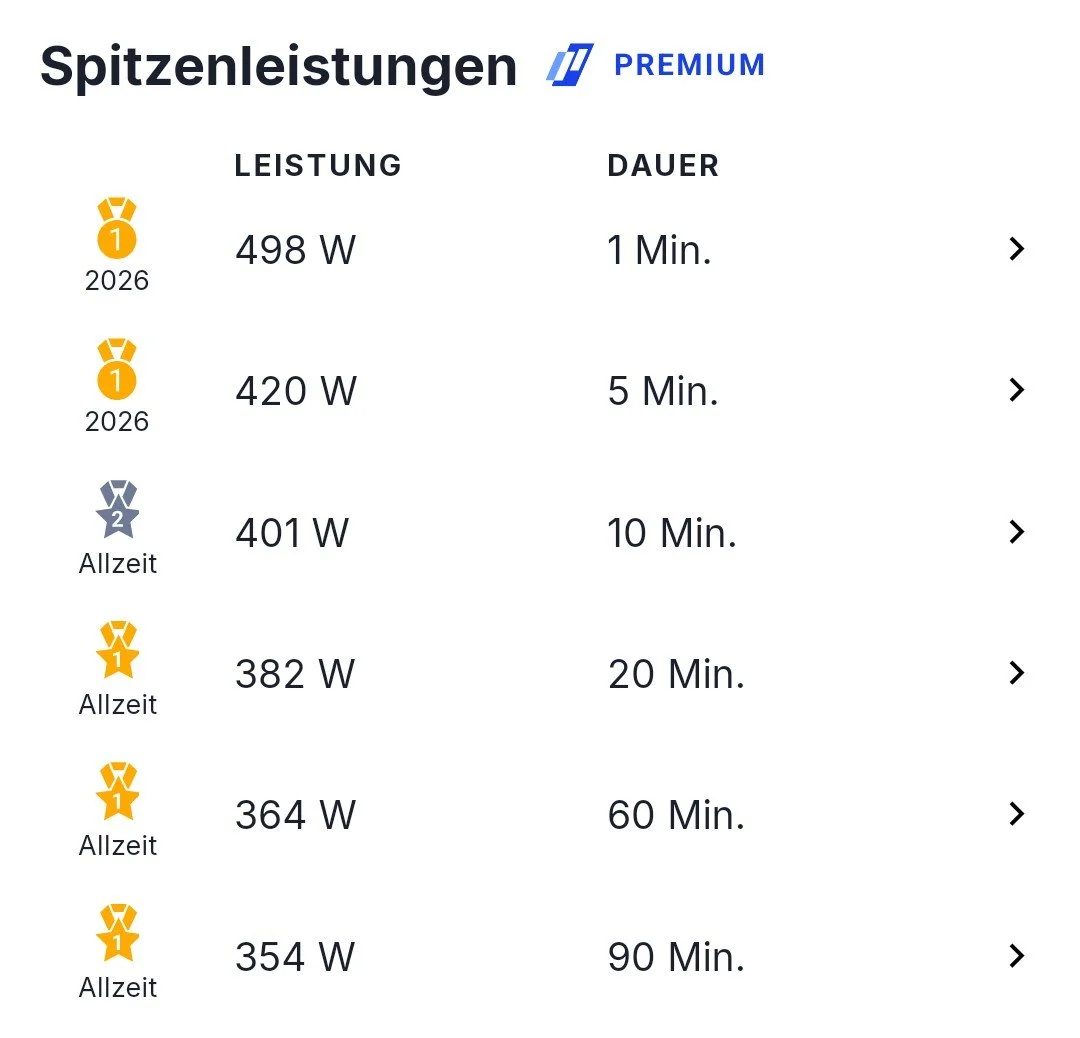
The first hill sorted that out and the race stretched. I put down some crazy numbers and I was not even hurting. My pre-race warm up and the carbs worked like a charm. In a hard training session I could never produce that, not even for 30 seconds. Here I was riding 420w for five minutes and still could not hold the front group.
On the second climb, the long one up the Col de Vence, the real work started. I settled into 380w because I knew I could hold it. The leaders slowly rode away. Probably because I was carrying 2.5L on the bike and at 75kg I am not a light guy. I lost the front group and rode alone for a while. Then I saw Van Riel, Blummenfelt and Iden closing the gap behind me. I was riding well and ready to join the chase pack. And that is where the problems started. Not because of the power, but because of Race Ranger.
What Race Ranger actually is
Race Ranger is an electronic drafting detection system. Every pro bike carries two units, one at the front and one at the rear, and they measure the exact distance between you and the rider ahead. A light on the rear unit tells both you and the athlete behind exactly where you stand. Orange means you are approaching the zone, blue means you are right on the edge, red flashing means you are inside the draft zone. The referee still makes the final call, but the distance itself is no longer a guess.
The system has genuinely made the sport fairer. I am not against it. My problem is what it does on a climb.
Why falling back uphill does not work
The rule is simple: when someone passes you, you have to drop back out of the draft zone. On the flat that costs you almost nothing. You sit up, you stop pedalling for a few seconds and the gap opens by itself.
Uphill you go nowhere. Gravity does not push you backwards. To open 20m on a steep gradient you have to actively brake your own race, cut from 380w to 300w and hold it there for twenty seconds. And while you are sitting there at 300w, the next rider catches you, because you just slowed down. He passes, the clock starts again, you cut to 300w again. And again. You lose place after place without anyone actually being faster than you.
And here is the part that makes no sense to me: at 20m behind on a steep climb, there is zero draft. Nothing. You gain absolutely nothing from being there. So the rule is protecting something that does not exist, while forcing you out of your own race.
My suggestion for climbs: a shorter draft distance, less time to complete an overtake and more time to fall back.
The penalty
After discussing it with the referee for a while I was exhausted and angry. I started a sprint and passed Blummenfelt and Van Riel in one go. I actually felt bad doing it and told them the uphill rules with Race Ranger are stupid. But those are the rules. You overtake, you resettle and they can come straight back past you.
At the top of Vence I was 20 seconds behind Blummenfelt. That would have been the perfect setup. Except I had to stop at the penalty tent.
I waited there with a lot of anger. The referee came over and I let him know in French exactly what I thought of his judgement. All he said was that the light was red. The woman timing my penalty looked at me and understood. She even asked him directly whether I had actually been drafting. He said no, but the light had been red for one minute, so he had to give the penalty.
That is the heart of it. Is Race Ranger there to help a referee decide whether someone is drafting or is every red light automatically a penalty? Uphill, 15m back, one minute in the red. Drafting or no draft? Race Ranger and Ironman, please educate your referees.
The descent
With that anger and adrenaline I came down the mountain like a tank. Clean lines, every corner taken properly and without crossing onto the other side of the road, unlike a few athletes we all saw on TV later 😉 I was fast but completely alone, so no draft and all the work on my own. In the end I did not lose any time to the front on the descent. I picked up four athletes going down and on the flat I found myself right behind Solok, the guy who had been just ahead of me when I rolled into the penalty tent.
I was genuinely surprised how well I was riding. My power on the descent barely dropped and by then I was starting to worry that after a bike that hard I might be running 4:00 pace.
Run
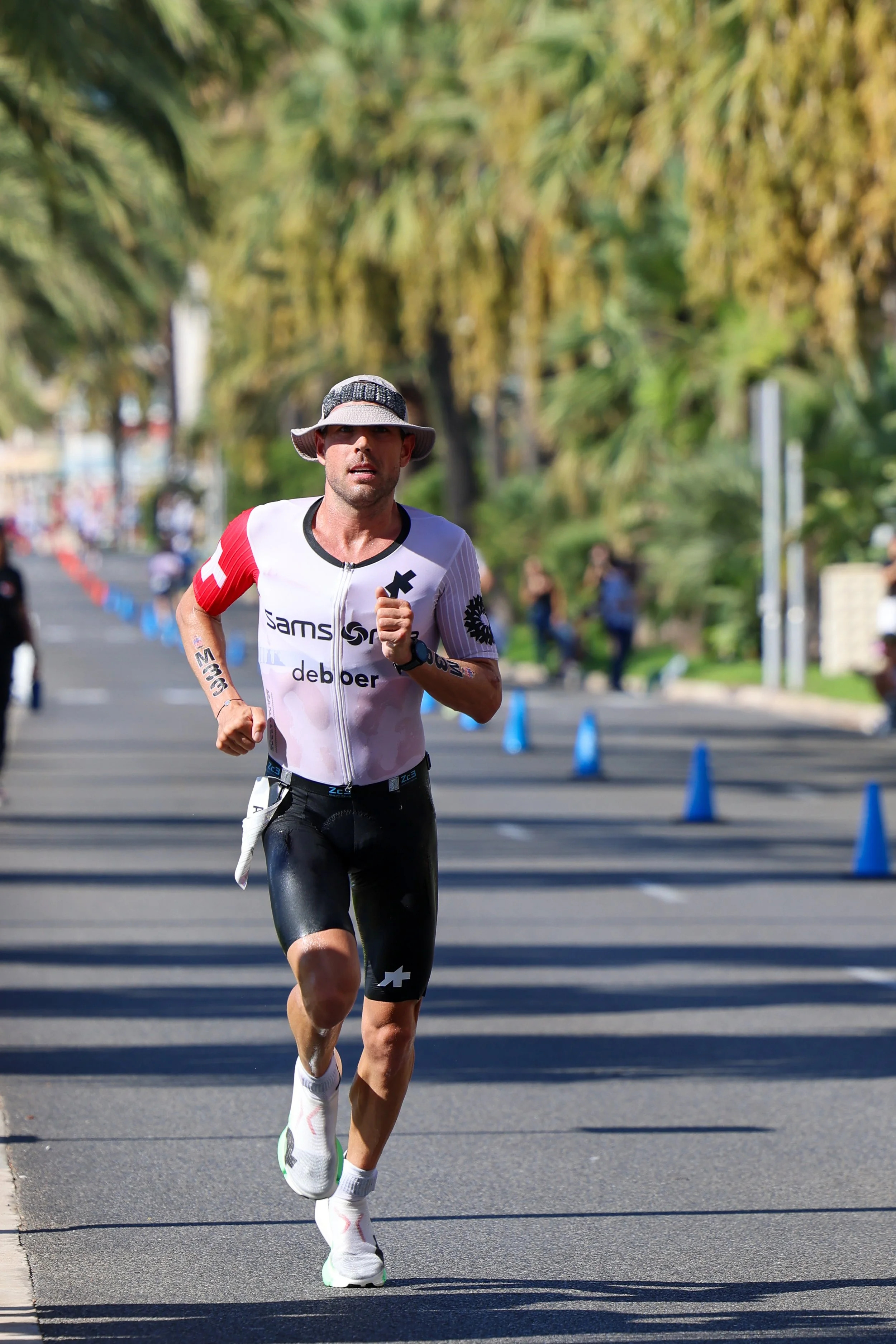
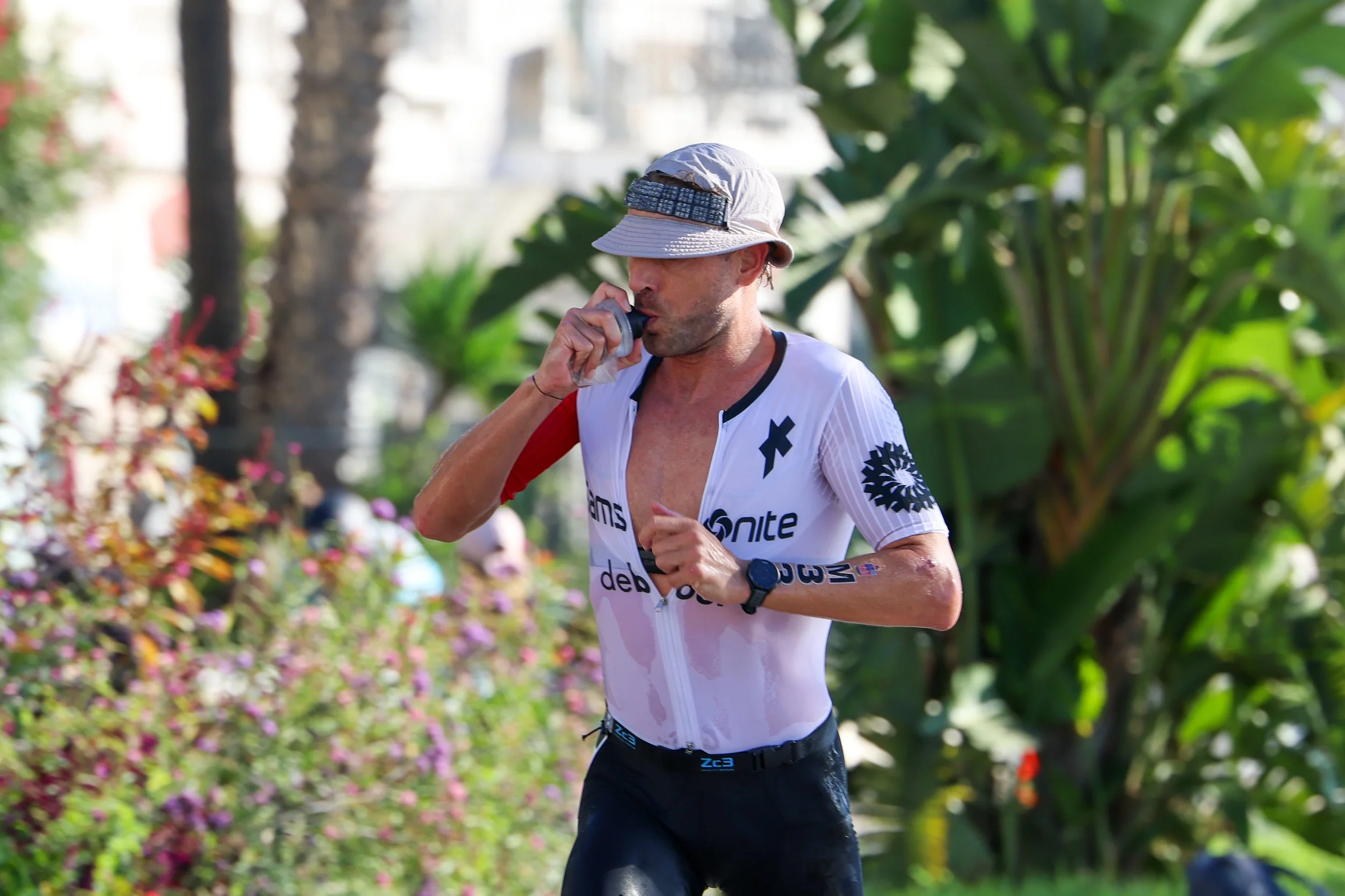
But no. My body was still working and the carbs kept doing their job. In the first kilometre I took 40g straight down and my legs started running immediately. From there I held a clean pace with no low point. I was focused on 3:20 to 3:25 and I am so happy I could hold it. The goal was simple: do not lose big time for the Pro Series points and deliver a strong run off a brutal bike. That penalty made the bike so much harder than it needed to be.
I actually collapsed at the finish line, but with a smile.
What I take from Nice
This was a great performance and a huge mental boost going into Kona. Without the penalty I could have been top 15. Let's be honest, a lot more than that was not realistic. The level right now is incredibly high. What matters is that my fitness is exactly where it needs to be.
See you on the island 🌴