Ironman Frankfurt
Ironman Frankfurt
The goal was simple: qualify for the Ironman World Championship in Hawaii.
The days leading into the race were anything but calm. I was nervous. A few weeks earlier I had crashed on my bike, which meant I hadn't been able to swim nearly as much as planned. Going into one of the hottest Ironman races ever, swimming was definitely not my strength.
When Ironman announced they would shorten the race due to the extreme heat, I thought it was the right decision. It wasn't because I wanted to race less—I was actually relieved that we'd be finished before the 40°C temperatures really hit.
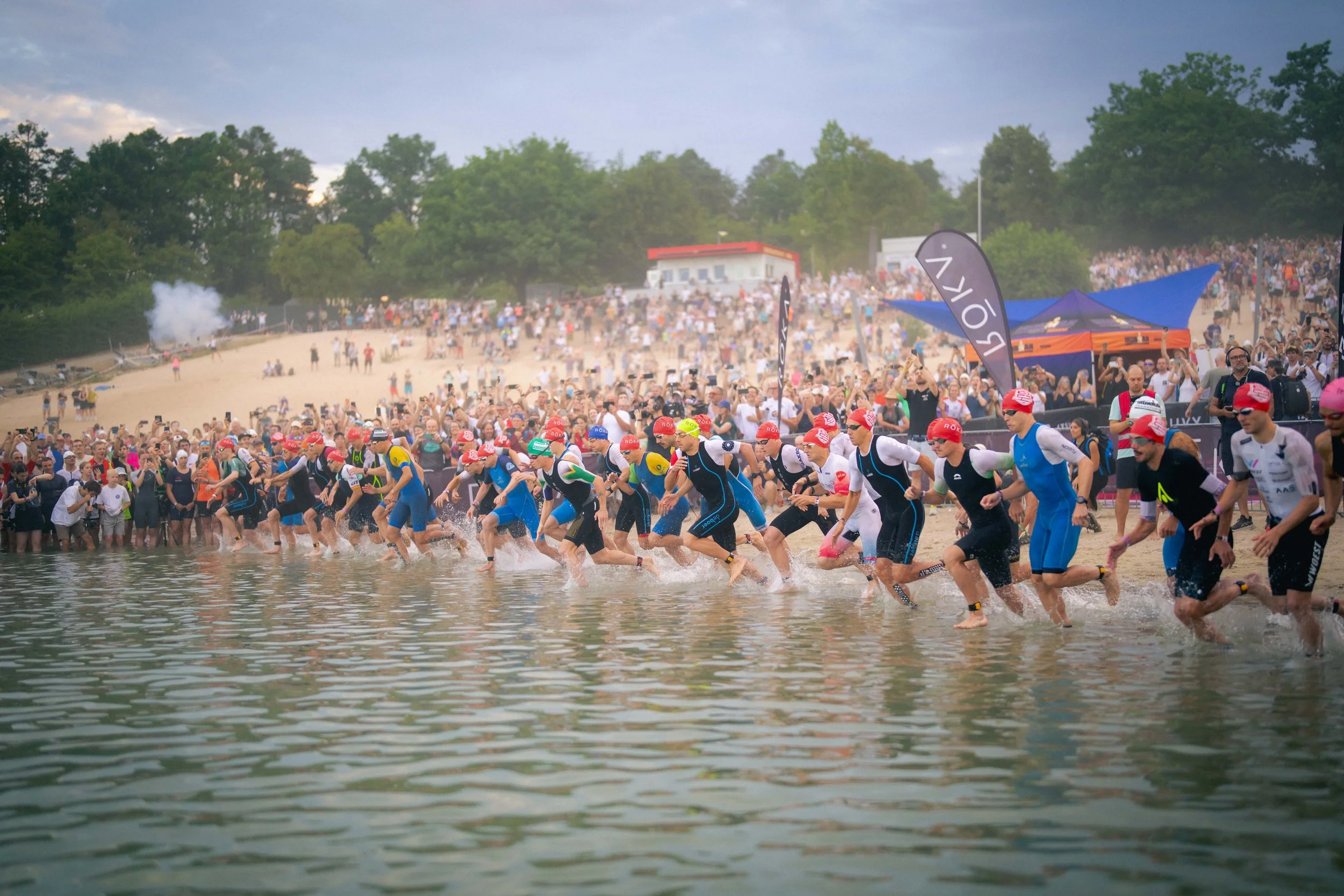
Standing on the start line, I felt something I hadn't experienced for a long time: I wasn't confident about my swim. Usually that's one of my strengths. This time I trusted my bike and run much more.
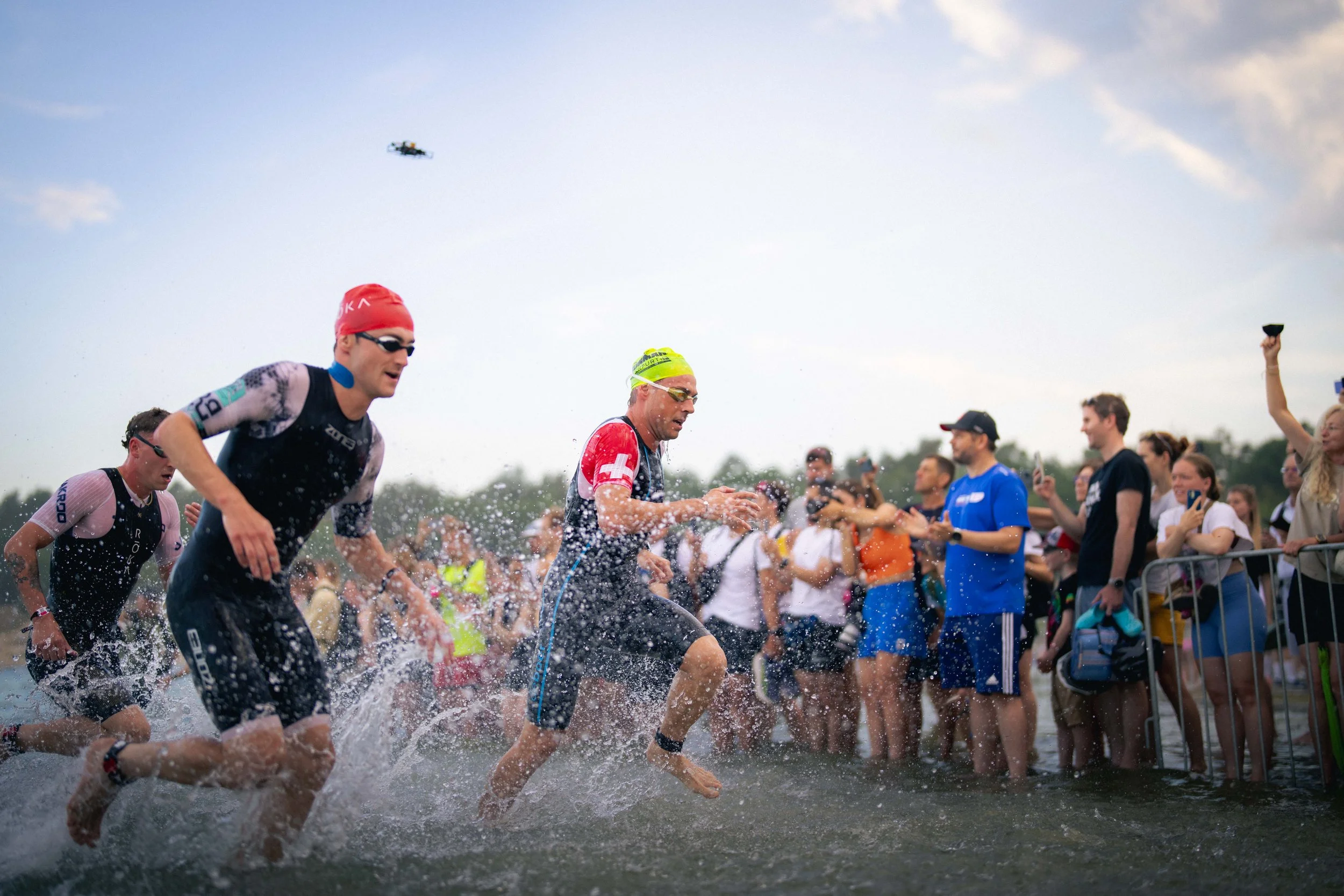
I got away well at the start, but within minutes I could already feel the 29°C water draining my body. I was hanging on for dear life in the front pack. Athletes were sitting on my hip, and normally I would have surged to drop them, but I simply didn't have the power. For the entire 3.8 km I was swimming at my absolute limit, desperately waiting to see the swim exit.
Finally.
T1 was complete chaos. Athletes were everywhere, everyone rushing to grab their bags and get onto the bike. I managed a quick transition—helmet, race belt, socks—and was soon riding away with the first group.
Within seconds I realized how much that swim had cost me.
My body felt empty, but instead of listening to it, I committed. I pushed close to 350 watts—normally a comfortable race effort—but this time it hurt. My head was burning from the heat.
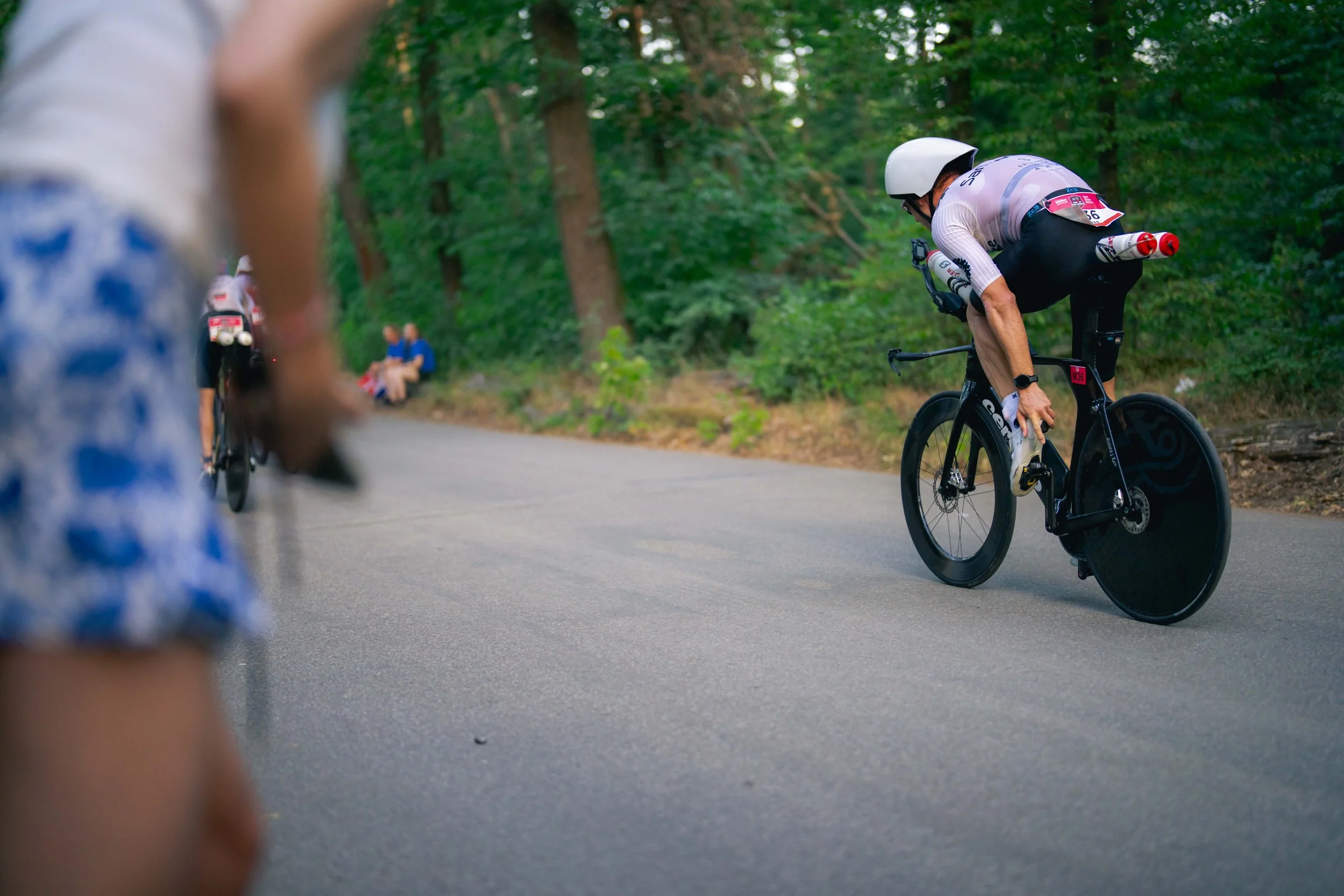
I started the bike with 3.8 L of fluid. Unfortunately, I lose around two liters of sweat every hour, so drinking enough is always a challenge. I could feel every extra kilogram of those bottles on the first climb. Rider after rider came past me, and I slowly lost contact with the front groups. Before long, the leaders disappeared into the distance.
My power dropped to around 290 watts.
From KM 40 to KM 80, I was simply surviving. I tucked in mentally, drank whenever I could, and hoped my body would eventually wake up.
Then, almost out of nowhere, it did.
My legs came back.
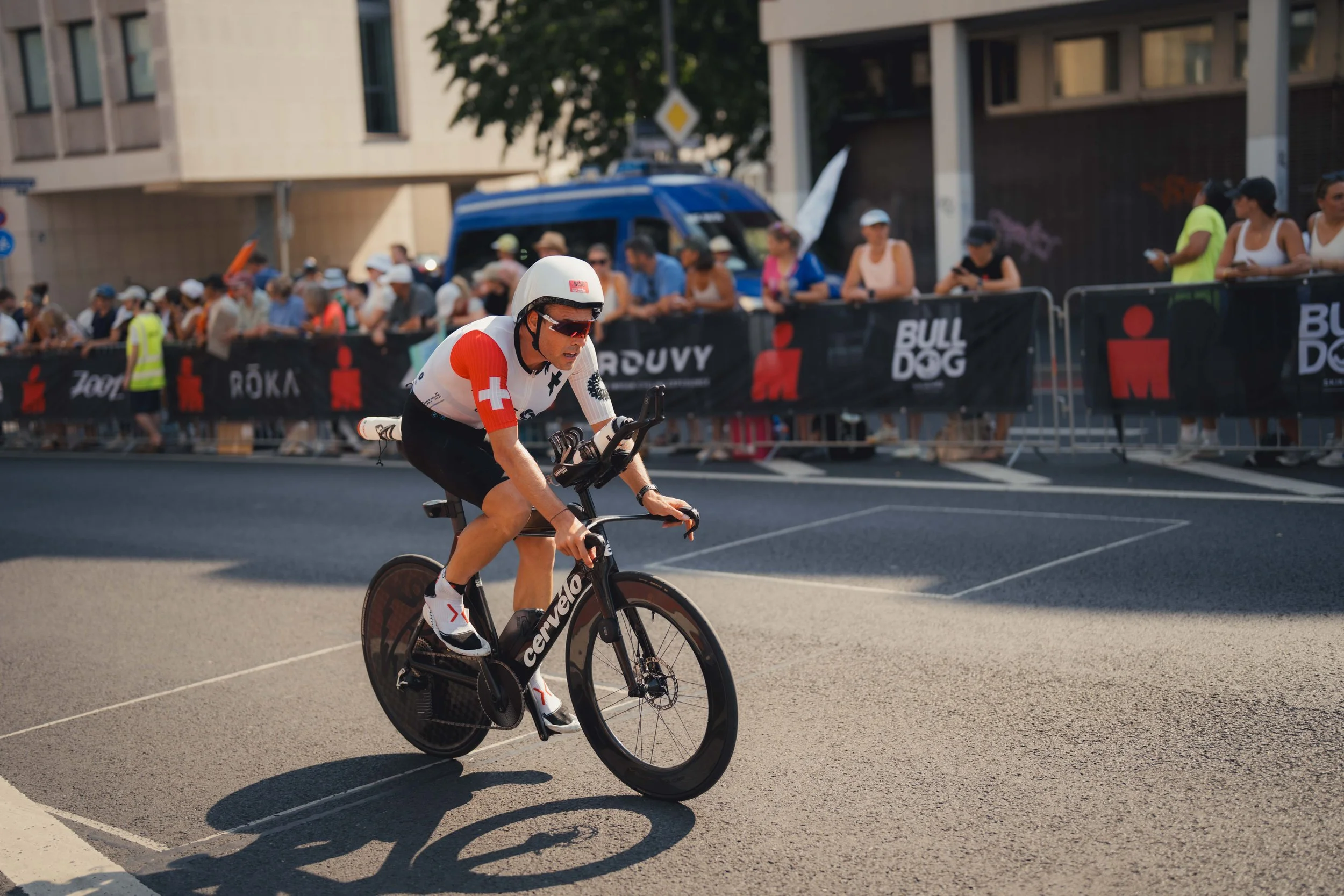
Suddenly I was riding 350 watts again. I accelerated away from my group and soon caught Luis and Ditlev. I had no idea how well I was riding because I had lost my Garmin over the cobblestones while riding through town. Luckily I was still wearing my watch, so I restarted the activity and at least had my heart rate to monitor.
It wasn't pretty.
My heart rate was sitting between 160 and 165 bpm—far higher than I wanted. I briefly settled behind Vincent, hoping it would come down, but it never did. Eventually I decided there was no point holding back anymore. I attacked again.
The heart rate stayed exactly the same.
Coming off the bike I was exhausted, but also excited. It felt like a comeback. Forty K’s earlier I had been hanging on for survival. Now I was back in the race.
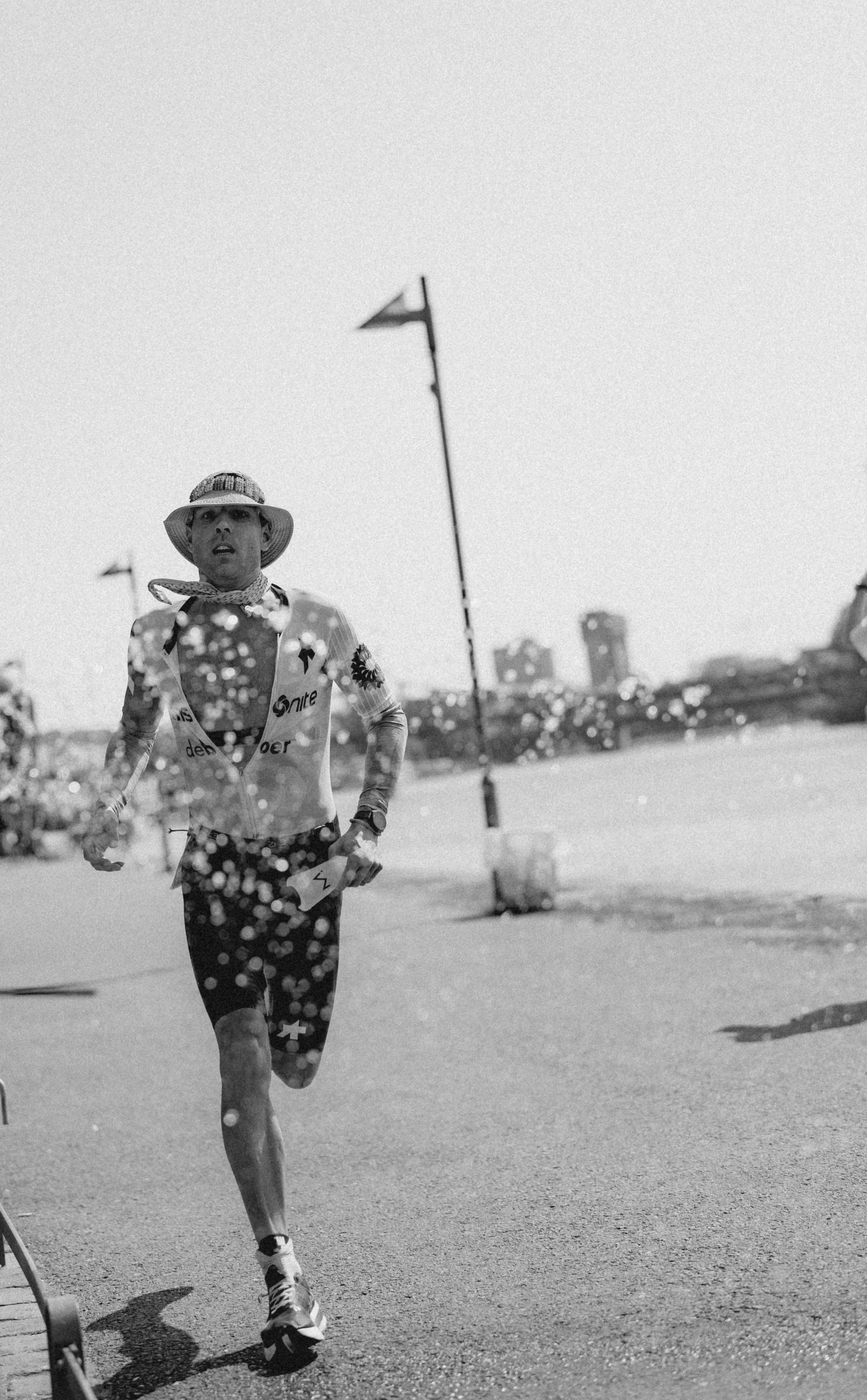
I took my time in T2, grabbed my nutrition flask, put on my cooling arm sleeves and an ice scarf around my neck, and headed out.
Just a half marathon to go.
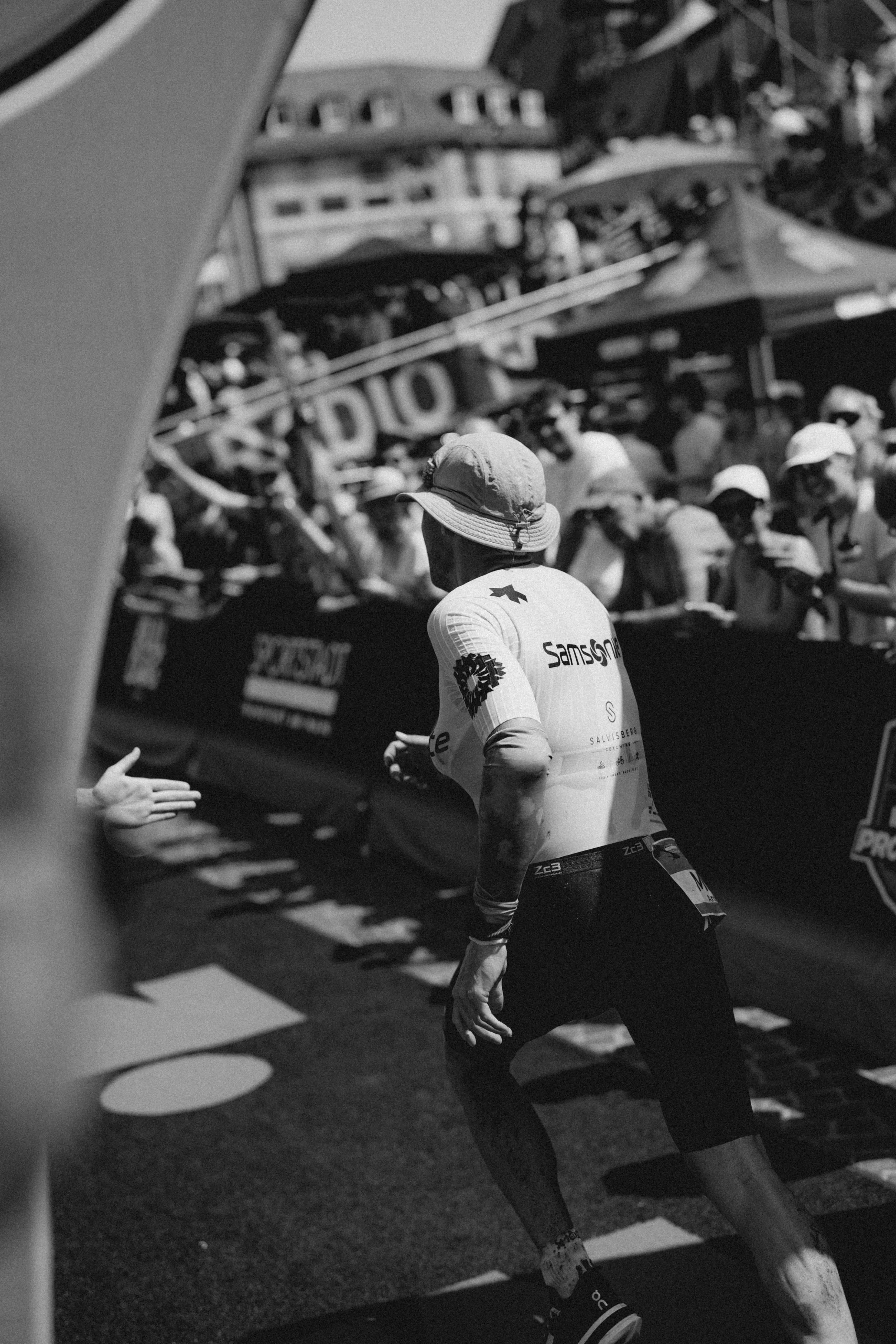
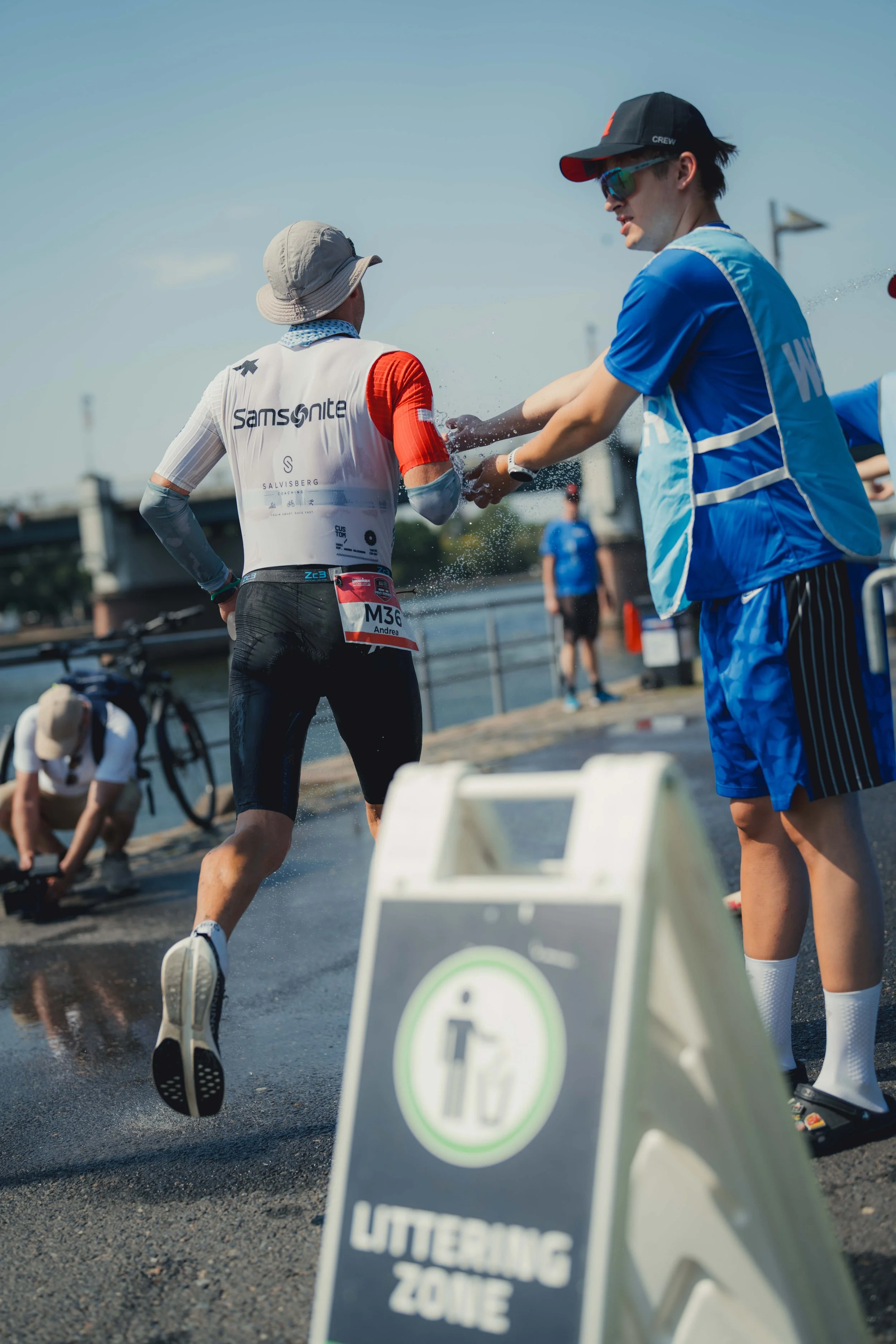
I've traveled all over the world and raced in every kind of condition, but I've never experienced heat like Frankfurt.
Every breath felt like standing behind the exhaust of a heavy truck. The air was thick, heavy and scorching—as if I was running straight into a wall of fire.
The aid stations became little oases. The water sprinklers were unbelievable. Every splash of water on my face felt like a new beginning.
Almost none of the drinks actually made it into my stomach.
Water, Precision Fuel, Coke... most of it went straight over my head, down my neck and over my body. Cooling myself became just as important as fueling.
The legs actually felt good.
The body, however, was melting.
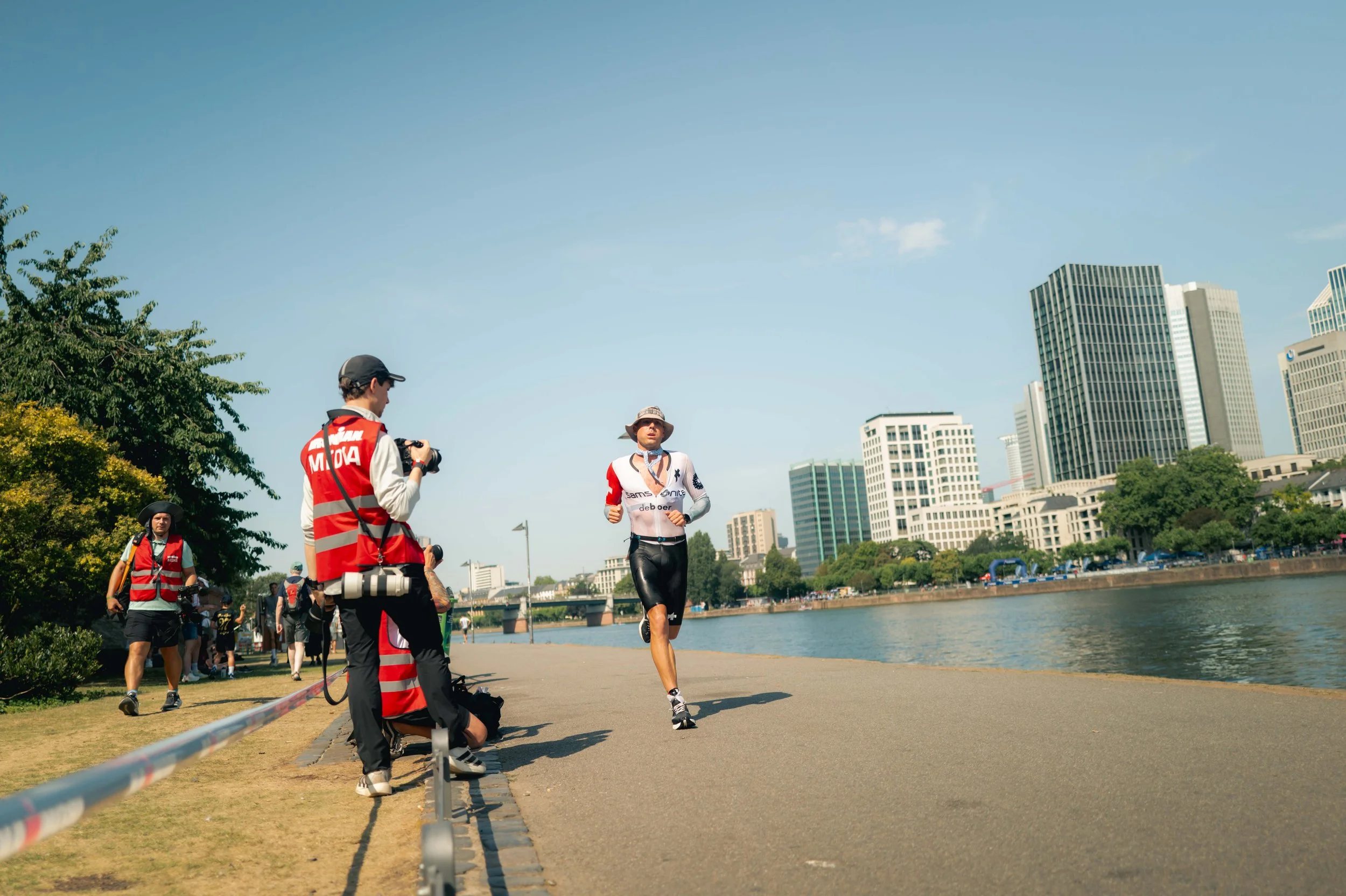
I managed to keep a steady pace and slowly closed the gap to the final qualifying position for Hawaii. Frankfurt offered six Kona slots, and eventually I moved into 11th place, just the last slot.
I was there.
One minute behind me was Magnus Ditlev.
Then, seemingly out of nowhere, he appeared.
He flew past me at a speed I simply couldn't match. I was already running around 3:30–3:40 per K, and it felt incredibly fast. He must have been running well under 3:20 pace.
There was nothing I could do.
My only hope was that he would crack.
He didn't.
I kept running as hard as I could. The pace stayed solid, but he slowly disappeared ahead. From that moment on, my only goal was to reach the finish line.
Every aid station became another opportunity to cool down and drink. Every cup mattered. My body was screaming for water.
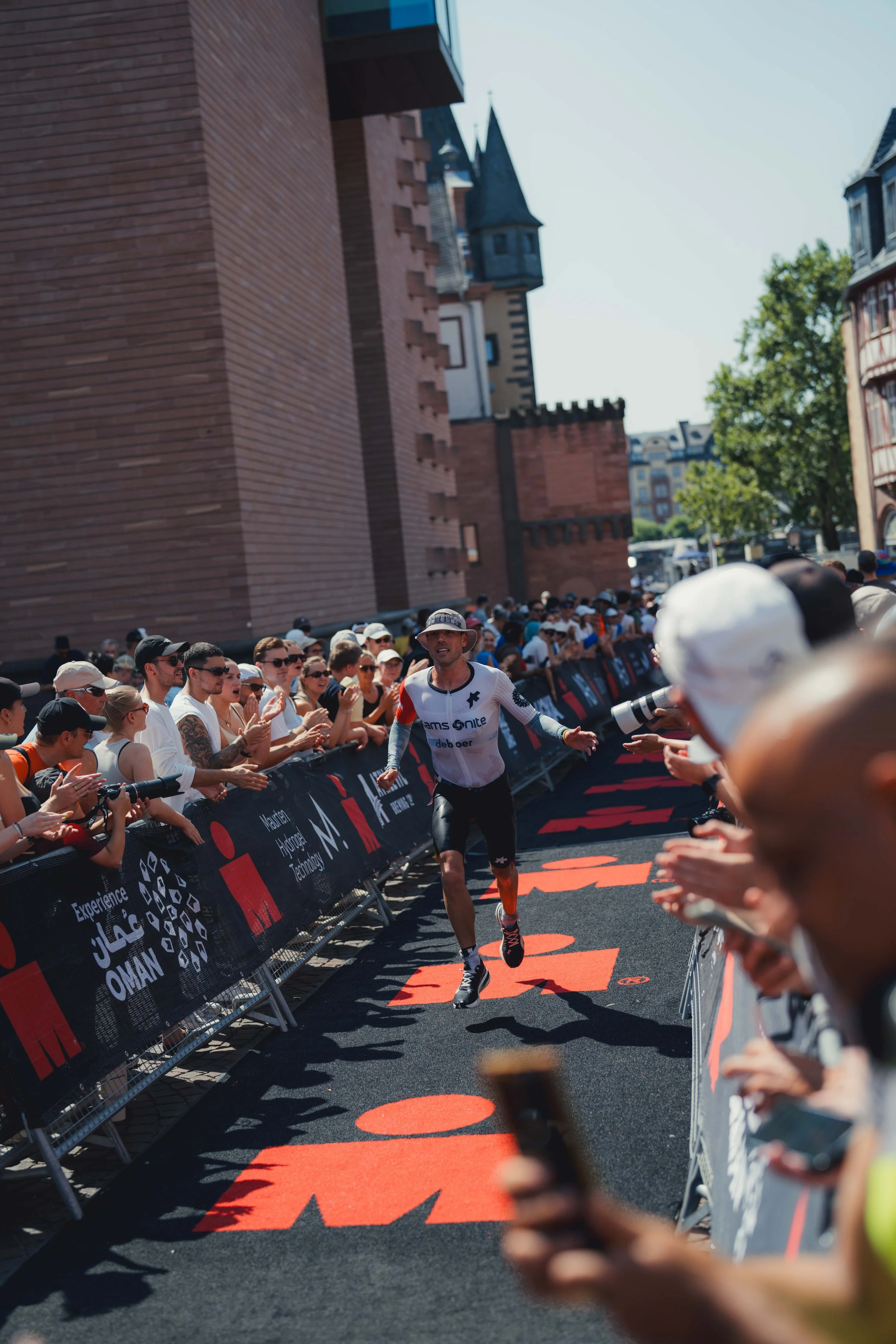
Crossing the finish line, I was completely empty.
Overheated. Exhausted. Done.
But also proud.
I missed my Hawaii qualification, but I finished 13th in one of the toughest Ironman races I've ever experienced, against an incredibly strong field and in extreme conditions.
The dream of Hawaii is still alive.
Now I'll have to find another opportunity.
Time is running short.